

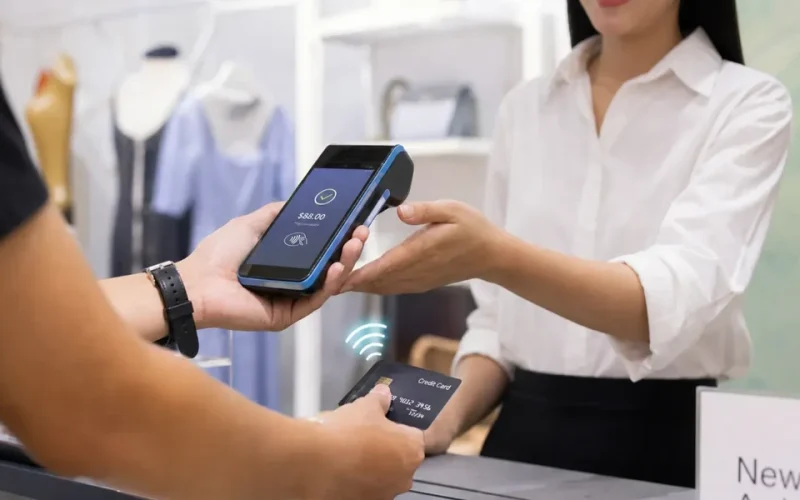
Today’s POS systems act as the central nervous system for retail stores. They connect physical sales floors directly with online databases, smart inventory, and personalized customer care. Here is how modern POS technology is completely transforming the retail shopping experience.
As retailers look for ways to improve both efficiency and customer service, POS systems have become an important part of the modern shopping environment. Beyond processing payments, these systems can connect sales data with inventory, customer information, and business reporting, giving retailers a more complete view of daily operations. This connected approach helps stores respond quickly to customer needs while keeping essential retail processes organized and efficient.
Erasing Long Checkout Lines with Mobile Checkout
Nothing kills a customer’s impulse to buy faster than looking at a 15-person line winding toward the register. Modern POS setups run on handheld tablets and mobile devices, allowing store staff to take payments anywhere on the shop floor.
Instead of waiting in line, shoppers can get their questions answered, pick out their items, and pay a sales rep right next to the display rack. Breaking free from the traditional cash wrap speeds up checkouts, reduces walkouts, and makes shopping feel completely effortless.
Linking Physical Stores and Online Inventory
In the past, physical store stock and online store inventory operated in total isolation. If an item ran out on the floor, the sale was lost even if hundreds of units sat in a nearby warehouse.
Modern POS platforms bridge this gap seamlessly with “omnichannel” features like Buy Online, Pick Up In-Store (BOPIS) or Save the Sale. If a shopper can’t find their size on a store rack, a staff member can use the POS tablet to scan the tag, check warehouse stock, take payment on the spot, and ship the item directly to the customer’s doorstep.
Personalizing the Customer’s In-Store Experience
Online shopping has spoiled consumers with personalized recommendations, but modern POS systems bring that exact same intelligence to brick-and-mortar stores.
When a customer enters their phone number or email at checkout, the POS pulls up their complete purchase history, brand preferences, and loyalty point balance. Staff can instantly suggest matching accessories, apply earned discounts without paper coupons, or welcome back a regular by name. That level of personal attention builds serious brand loyalty.
Supporting Fast, Contactless Payment Options
Shoppers rarely carry cash or want to swipe traditional magnetic-stripe credit cards anymore. Today’s POS hardware accepts every modern payment method in a fraction of a second:
- Tap-to-pay credit and debit cards.
- Digital wallets like Apple Pay, Google Wallet, and Samsung Pay.
- Buy Now, Pay Later options for larger purchases.
- QR code payments and digital receipts sent straight to email or SMS.
Offering flexible, touch-free payment options keeps line movement fast, keeps germs at bay, and gives customers total freedom in how they pay.
Smarter Stocking with Real-Time Data
For retail managers, a modern POS is an invaluable decision-making tool. Every tap on the screen instantly updates inventory counts, sales numbers, and staff productivity metrics.
Instead of guessing what products to order for next week, store owners can look at real-time analytics to see which items are flying off the shelves and which ones are taking up dead space.
Summary
Modern POS systems have evolved from simple transaction tools into powerful engines that drive retail success. They turn routine store visits into smooth, enjoyable shopping experiences.
